





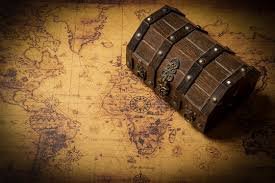
More than just finding things — Treasure hunts transform ordinary spaces into exciting places to explore, solve, and adventure through! With the right setup, any room, backyard, or park becomes a world of clues, challenges, and discoveries for everyone.
⚠️ Important Notes
- Be Safe: Perform a full safety check of the treasure hunt area. Look for hazards, remove anything risky, and make sure the adventure boundaries are secure.
- Define Clear Boundaries: Every treasure zone should have a clear “play area.” Tell participants exactly where they can and cannot go to keep the hunt focused and safe.
- Provide a Loadout: Give players everything they need at the start — bags, maps, clue cards, tools, notepads, pens, or any special items required. A good loadout prevents frustration and makes the hunt feel more official.
🗺️ Treasure Hunt Styles:
1. Clue‑to‑Clue Hunt
Follow one clue to the next until you reach the final treasure, like solving a mystery step by step.
Clue Styles:
- Picture Clue: Show a photo or drawing of the next location.
- Arrow Clue: Simple directional hints pointing the way.
- Note Clue: Riddles, rhymes, or short written hints.
- Special Character Clue: A mascot or character leaves clues with personality or story flavor.
2. Path Hunt
Create a defined route players must follow — a trail of markers, symbols, or checkpoints. This is more of a guided adventure, perfect for younger players or themed quests.
Examples:
- Chalk arrows on the ground
- Rope or ribbon trail
- Numbered stations
- Footprint markers leading from spot to spot
3. List Hunt
Players receive a list of items or tasks to complete anywhere within the boundaries. This treasure hunt is fast, flexible, and great for groups or competitive play.
Examples:
- Find 10 objects
- Complete mini challenges
- Collect themed items (colors, shapes, nature objects)
- Photograph specific things
🏆 Bringing Your Treasure Hunt to Life
Once you’ve chosen your hunt styles, it’s time to make the adventure feel magical, organized, and unforgettable.
🎒 Create the Treasure
Your treasure can be anything fun:
- A box of small toys
- Stickers or badges
- A special note or certificate
- A snack or treat
- A “mystery item” wrapped up
The treasure can be themed with their journey.
🎭 Add Story Along The Way
A treasure hunt becomes way more exciting with a simple story. Try themes like:
- Pirate Adventure — Captain Starbeard hid his gold!
- Jungle Quest — Find the lost emerald of the forest!
- Space Mission — Recover the missing star crystals!
- Detective Mystery — Solve the case of the disappearing treasure!
A tiny bit of lore makes every clue feel important.
🧩 Design Great Clues
Good clues are:
- Clear
- Fun
- Age‑appropriate
- Connected to the theme
You can use:
- Rhymes
- Drawings
- Symbols
- Simple puzzles
- Hidden objects
- Codes
Make sure each clue leads smoothly to the next.
🧭 Place Clues Smartly
Hide clues where people can find them without frustration:
- Under a pillow
- Behind a plant
- Inside a book
- On a chair
- Under a rock
- Tied to a tree
Avoid spots that are too tricky or unsafe.
🎉 Run the Hunt
When everything is ready:
- Give players their loadout.
- Explain the boundaries.
- Share the story.
- Hand out the first clue.
- Let the adventure begin!
Cheer them on, help if needed, and enjoy the excitement.
🌟 Optional Fun Extras
- Timers for speed challenges
- Teams for group play
- Bonus mini‑clues for extra rewards
- Treasure maps with drawings
- Costumes (pirate hats, explorer badges, etc.)
These little touches make the hunt feel legendary!